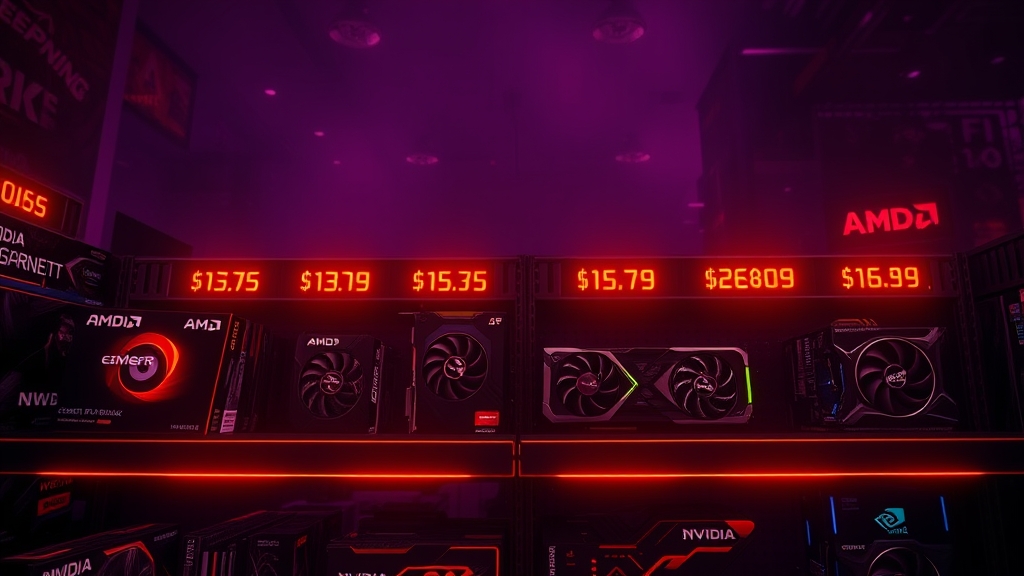
AMD Gives In: Price Hikes Coming for Everything Starting August
Over the past few weeks, the details have been leaking out: AMD has notified its partners of a 10% minimum price increase on Radeon cards and memory kits, effective starting August 2026. This announcement didn't come out of nowhere — it came weeks after Nvidia had already hiked their prices.
Here's the worst part? AMD knew they were going to do this long before they said anything. According to supply chain reports, the company approved the increase internally back in June 2026, but deliberately delayed the announcement waiting for Nvidia to move first. They were terrified of losing market share if they went first. In other words: they waited until their competitor raised prices to confidently copy the move.
The Window for Cheap Options Just Slammed Shut
For years, Radeon offered something rare in the GPU market: a proven budget alternative to GeForce. Want a powerful card for slightly less than Nvidia? Radeon was your answer. Now? That's gone. Both companies are on the same page now.
This means any gamer hunting for that sweet spot between performance and price won't find a meaningful difference anymore. Both will be climbing in price together from here on out.
Nvidia Got There First: This Is Their Third Price Hike in 2026
Nvidia didn't mess around with a modest increase. On July 25, 2026, they jacked up the cost of GPU memory kits across their entire GeForce lineup — not just the flagship cards, but mid-range models too. The hike covered both GDDR6 and GDDR7 memory kits.
But that's not even the whole story. Reliable reports are talking about a possible RTX 50 series price jump of 20% to 30% — Nvidia's third major price hike this year. This jump will hit store shelves once current stock runs dry, and the biggest spike is expected on newer cards like the RTX 5070 Ti.
The Real Culprit: GDDR7 Memory Is Eating Everyone's Budget
Let me be straight with you: Nvidia and AMD aren't the primary villains here. The real guilty party is something smaller and less famous: the skyrocketing cost of GDDR6 and GDDR7 memory chips driven by insane demand from the AI industry.
This isn't just loose talk. The numbers tell the story: a single 3GB GDDR7 chip runs about 60 to 70 dollars — roughly three times the cost of a 2GB chip at around 20 bucks. That's a massive jump in a short window.
The kit delivered to board partners like ASUS, Gigabyte, and MSI bundles the GPU and its memory together in one package, so costs skyrocket for these manufacturers before the card even hits store shelves.
The Cost Chain: From Nvidia Straight to Your Wallet
Here's how it works:
- Nvidia raises the price of the kit (GPU + memory) they hand to their partners
- ASUS, Gigabyte, and MSI raise prices for the distributors (wholesalers)
- Distributors raise prices for retail shops and online stores
- You, the consumer, pay the final bill
Every layer adds a margin, and the pressure trickles down until it hits the retail price you see in the store.
Don't Blame Just Nvidia and AMD: Who Actually Controls Memory Prices?
Here's what you need to know: just three companies control nearly the entire global DRAM memory production. These companies basically set the prices, and both Nvidia and AMD are just price-takers, not price-makers.
Sure, they could choose to absorb some of the costs and fight for market share. But that tanks profits. The easier route? Pass the costs forward — which is exactly what's happening right now.
The Window for Reasonable Prices Has Closed
In my personal opinion, this means one clear thing: the era of reasonable pricing on modern GPUs is over. You can't say anymore, "I'll grab an Nvidia or AMD card here for less." Both companies are in the same boat now.
Serious gamers, designers, developers — anyone who needs serious GPU power — will find themselves either waiting for upgrades or paying way more. The only third option: stick with your old card longer than you planned.
Final Recommendations
If your current card still works: Don't rush into an upgrade. Wait for prices to settle — and that could take months. The jump between an old and new card won't be worth the price spike.
If you're planning a new build: Either buy now before August if you can find old stock at lower prices, or wait until next-gen cards hit with better pricing. Don't buy somewhere in the middle.
If you're on a tight budget: Honestly, this market isn't for you right now. The entry price has gotten brutal. Look at alternatives or wait several more months.